Navigate Cancer with Clarity-Not Confusion
“What ‘s influecing your decisions?”
Patient built to help you make sense of your options and what’s influencing them".”
If you or someone you love is facing cancer, the experience can feel overwhelming—multiple specialists, complex decisions, and side effects that escalate quickly.
Inside Cancer Care and Cancer Captialism were created by a two-time Head & Neck Cancer patient with 35 years of experience in OSHA and safety systems—bringing a practical, systems-based approach to navigating care.
How we help:
Understand your care plan with total clarity.
Make informed decisions without the second-guessing.
Avoid preventable risks through a systems-based approach.
“Understanding this system changes how decisions are made.”
HOW CANCER TREATMENT DECISIONS ARE MADE
“Most patients only see part of the system. Critical factors are hidden. Decisions are rushed. That’s where mistakes happen.”
Most patients believe their decisions are based purely on medical facts.
This is the system most patients enter after diagnosis.
A default path is presented.
Time pressure is introduced.
And questioning that path can carry subtle consequences.
Together, these forces shape decisions quickly, often before patients have full visibility into their options.
Understanding this system doesn’t mean rejecting care.
It means seeing how decisions are formed so you can engage with them more clearly.
“Once you see the system, you begin to see your place within it.”
START HERE: Follow This Path Before Making Decisions
“If you’ve been diagnosed or are helping someone who is, don’t start with scattered research. Follow this sequence to understand what’s happening before you make decisions that are hard to reverse.”
-
STEP 1 — Understand How the System Works
Understand How Cancer Care Decisions Are Shaped
See how treatment paths are formed, what influences recommendations, and where patients are often missing critical context.
-
STEP 2 — Learn How to Evaluate Your Options
Learn How to Break Down Treatment Decisions and what to question before you decide.
Understand what to question, what to compare, and how to interpret what you're being told
-
STEP 3 - Review the Patient Tools
Learn how to used the Patient Tools to make informed decisions so you don’t overlook critical details in your situation.
Practical resources to help you track, organize, and navigate your situation with more clarity.
THE FOUNDATION OF CANCER CAPITALISM
“A structured way to understand how cancer care really works—and how to navigate it.”
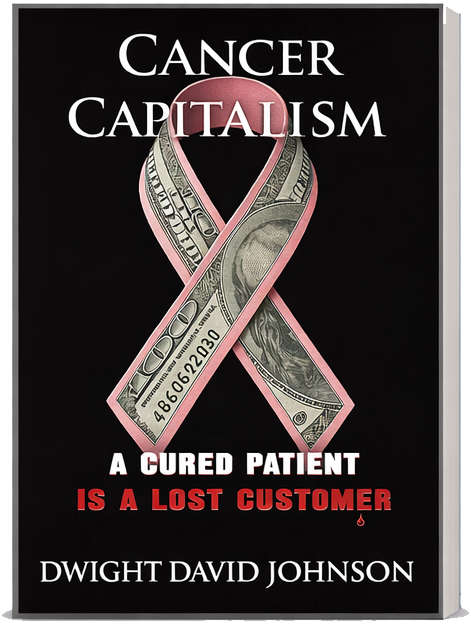
The true story of Dara Lemoine-Johnson—and her continuing eight-year cancer journey that exposes how modern medicine can drift from healing into commerce.
What you’ll uncover:
How diagnoses go unverified
Why treatment can follow billing—not biology
How patients are guided by urgency, fear, and scripted consent
What you get:
Resource Vault → tools like the Consent Decoder
Evidence Vault → studies, statutes, and case files


“The patient is not the product— the patient is the purpose.”
What You’ll Start Seeing Once You Understand the System
“Once you understand how the system works, patterns start to become visible—in treatment decisions, reported outcomes, and even the language used to explain care.”
-
STEP 4 — See How Treatment Decisions Are Shaped
Use this to better understand your treatment options, compare recommendations, and make decisions with clarity.
-
STEP 5 — Understand What Outcomes Really Show
Use this to understand how outcomes are measured, reported, and what they may not fully capture.
-
STEP 6 — Decode the Language Used
Use this to better understand the language of cancer care—how terms are used, defined, and interpreted in practice.
EXAMPLE: THE AFTERMATH OF CANCER CAPITALISM
A survivor’s case study of what happens when treatment ends but the damage doesn’t.
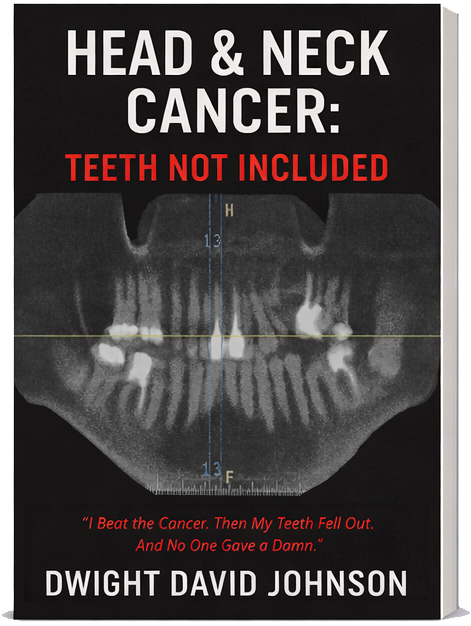
When survival ends—but the damage doesn’t
The true story of a cancer survivor—and what happens after treatment, when the system that saved you stops showing up.
What you’ll uncover:
How radiation can destroy teeth years after treatment
Why treatment-caused injuries are often not covered
How survivorship gaps are built into the system—not accidents
The Medicare policy that exists—but is routinely ignored
What you get:
Policy Insight Framework → understand your rights under Medicare updates
Documentation Strategy → how to build a record the system can’t dismiss
Advocacy Tools → navigate specialists, institutions, and denial pathways
“Survival should not mean living without teeth—and care should not end when treatment does.”
Apply What You’ve Learned to Your Situation
“Once you understand how decisions are shaped, the next step is breaking down what you're being told—before you commit.”
-
Standard of Care
What it really means—and how it influences what you're offered first.
-
NonCompliant
What happens when you question or step outside recommended protocols
-
Urgency
How time pressure is used—and when it matters vs when it doesn’t.
-

Patient Decoder
Use the Patient Decoder to break down recommendations, clarify what’s being proposed, and understand how decisions are being shaped.
-
Medical Doublespeak Keys
Use the Medical Doublespeak Key to translate complex or ambiguous language—so you can better understand what’s being said, and what may not be.
-
Patient Toolbox
Resources designed to support you before, during, and after treatment—helping you recognize changes, document outcomes, and respond with clarity.
HEAD & NECK CANCER PATIENTS
“Tools to Help You Make Better Decisions”
For patients navigating head and neck cancer, understanding the system is only part of the process.
The next step is knowing what to do within it.
The Head & Neck Cancer Patient Toolbox was developed from lived experience, designed to support patients and caregivers through the day-to-day realities of treatment and recovery.
It reflects what is often missing between diagnosis and survivorship.
What this section includes:
Guidance for what to expect throughout treatment
Tools to track symptoms and identify changes early
Structured routines to support nutrition and daily care
Resources to stay organized, informed, and supported
This is not a general overview.
It is a practical framework built around real conditions patients face, where small decisions, made consistently, can change outcomes.
“When the system stops tracking the damage, patients are left to recognize it themselves.”
Why This Matters—and Who It Comes From
This perspective isn’t theoretical, it comes from firsthand experience navigating the system as both a patient and an analyst.
DWIGHT DAVID JOHNSON

Dara Lemoine-Johnson & Dwight David Johnson
Dwight David Johnson is a two-time head & neck cancer treatment survivor and a veteran occupational health, safety and environmental professional with 35+ years of experience analyzing how complex systems operate and where they fail.
His work sits at the intersection of lived experience and systems investigation.
After navigating cancer treatment personally, and as a caregiver to his wife, Dara Lemoine-Johnson, Dwight began applying the same principles used in safety science, verification, root cause analysis, and system accountability to modern medicine.
What he found was not a series of isolated oversights, but patterns.
Patterns in how diagnoses are accepted.
How treatment decisions are shaped.
How patient consent is guided.
These insights became the foundation of Inside Cancer Care & Cancer Capitalism and the broader body of work presented on this platform.
This is not a clinical perspective. It is not a theoretical one.
It is a patient-centered investigation grounded in real-world experience, structured analysis, and a commitment to making complex systems understandable.